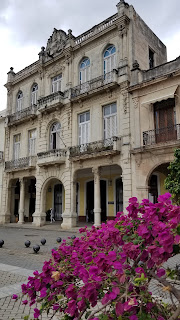
Saturday, February 3, 2018

Casa Particulars: A Staple of Cuban Hospitality


          Casa Kiki is a Casa Particular located in Cienfuegos, Cuba. But, without knowing that you were in a rural part of a formerly communist country, the casa would easily be mistaken for a nice bed and breakfast in the United States. There was a minimum of five rooms in the house for guests and a full bar on the roof deck that overlooked a few streets of Cienfuegos. The room that my roommate and I were assigned to had a bathroom that was almost the same size of some of the other rooms that we stayed in and it included a tub. Shortly after being shown our room, Kiki, our hostess, asked us how we would like our eggs cooked in the morning for breakfast. On top of the kindness and luxurious size of the room, the cleanliness was impeccable.

After arriving back from dinner in town, Kiki’s son and friend (pictured above) opened up the bar on the upper level for all of us to enjoy. This was a full-service bar with everything from beer and wine to Pina Coladas. Every Pina Colada was topped with two fun twisty straws and a paper umbrella to truly give it that tropical touch.  It was very evident that the hostesses were doing everything in their control to provide an unforgettable experience for us, the consumers.

The hospitality put forward by Casa Kiki was impeccable and far surpassed any standards or expectations that I had for my stay in Cuba. While Casa Particulars are common in Cuba, the majority of the Cubans renting out rooms in their houses have probably barley, if ever, experienced hospitality from a consumer perspective or taken a hospitality course. Yet, most of the Casa Particulars, especially in Kiki’s case, seemed to know exactly how provide a good experience for the consumer. With that said, an unfortunate side effect of this mentality is that sometimes it felt like the true people-to-people experience was lost because the hostesses were so focused on providing a professional and enjoyable experience that meet American standards. 

Friday, February 2, 2018

Travel the Uknown


I’m not going to lie. I didn’t know all that much about Cuba before starting this course. The extent of my knowledge about Cuba was that it was an estranged land that had been facing the trials and tribulation of a communist regime and the U.S. embargo, and that Cubans generally had a negative view of America. Shortly before enrolling into this course, the U.S. State Department even recommended that Americans to not travel to Cuba because they could risk becoming victims of the mysterious attacks that diplomats went through while stationed in Havana. I even questioned my decision of going to Cuba because of the reputation that it had gained. However, this trip helped quash these misconceptions and I realized that sometimes it's better to find out about things for yourself.

Flag at the Museum of the Revolution
Upon arriving in Havana, I decided to wander around the streets of Old Havana. I was somewhat anxious because I knew nobody, couldn’t speak the language, didn’t really know where I was, and I didn’t know where to go. However, I decided to just walk down the street from our first casa particular (private homestay) and quickly found the busy road of Obrapia. The road was full of locals and tourists interacting like any other place that I have visited. Restaurants were busy, markets were full of tourists, and there was music everywhere. The atmosphere was very much alive and it certainly seemed like a place that should not be feared. It was just another place full of people enjoying their surrounding.

Obrapia
My thoughts on Cuba changed by the minute as we traveled around the country. It was a place that I felt comfortable in right away and reminded me of places that I have love visiting in the past.  On the first night, we met our tour guide, Inti, who would be leading our group for the rest of our trip. I feel like we got lucky to have a guide like Inti. He was friendly, approachable, knowledgeable, aware of the political and social climate surrounding us, and very open about his opinions.

View of the sunset from our casa in Havana
One thing that Inti was great at expressing was Cuba’s ability to persevere. Cuba certainly went through some challenging times in their history, but they continue to make progress as a country. Our trip to Cuba is something that I will never forget and I’m fortunate to have had the opportunity to visit such a unique country and learn about what they are really all about.   

Responsible Travel on a Guided Tour

This was the first time I’ve done an organized tour such as the Hola Cuba: Intrepid tour. In the past, I’ve done the odd 2-day tours every now and then, but never have I done a 9-day trip like this. There are a variety of reasons why I tend to prefer traveling on my own schedule. I prefer going at my own pace, I don’t particularly like following a set itinerary, and flexibility is something that I value while traveling. But alas, as an American, we have to follow certain rules in order to travel in Cuba, but I’m glad I got to travel with a tour operator that values responsible tourism.

Viñales
I like finding activities that will let me engage with local communities and enjoy an authentic experience, but by traveling with a tour, I was concerned that we would be steered to events, attractions, and shops that wouldn’t directly benefit those in need. Tourism is certainly a powerful economic development tool, and one that is so much more prevalent in Caribbean nations such as Cuba. At the end, I was pleasantly surprise with the tour we embarked on because Intrepid tried to make sure that they were operating in the most responsible manner in order to have a social and economic impact for local communities.

Our tour guide, Inti, in Cienfuegos
The tour made sure that we would buy local when possible. That is partially because large international corporations haven’t invested in Cuba yet like they have at other destinations, but everywhere we shopped, ate, and stayed were more or less locally owned. The tour also made sure that we respected the communities that we visited, and that is essential for a people-to-people trip like this. We had the opportunity to meet local artisans, tobacco farmers, salsa dancers, and at every point we were encouraged to be mindful of the places where we visited.


This tour was able to change my thoughts about the typical tour groups, and I appreciate the chance to come to this realization in a country like Cuba.

Stop What You're Doing, Get to Viñales!

This winter, twelve GWU students, two faculty members, and one chaperone toured Cuba for ten days… leaving with rum, cigars, and the memories to last a lifetime. Entering the country on educational visas, our group was escorted through four different Cuban cities via Intrepid Travel’s Hola Cuba! Tour. Although each stop on our trip was incredible, I’ll never forget our trip to the Viñales tobacco farm.


Famously known for the top-of-the-line cigars produced in this region, Viñales, (a rural farming town in Western Cuba), is the perfect combination of natural beauty and cultural wonders. Life in Viñales revolves around agriculture, so visiting the incredibly lush and abundant farms in Viñales was a no-brainer for our group.

However getting there was another story…
Our journey to the Correa family tobacco farm was not an easy one- but fun none the less! After being deposited by a bus on a never-ending stretch of dirt road, our group began the hour and a half-long trek up the mountain. Luckily, we had an incredible guide that spent much of the trek teaching us about the flora and fauna of the area, the history of Viñales, and day-to-day activities of farmers in the region. 


He let us stop at various points so that we could fully take in the incredible views of the valley’s famous limestone ‘mountains’, and was very patient with our group of animal lovers- giving us time to visit with ALL of the animals.

Finally, after making our way through steep mountains, lush rain forests, and tight cave-like passages, we made it to the Correa family's farm- a small but beautiful facility at the base of the limestone mountains. We were immediately greeted by the farmer’s mother with small cups of farm-produced espresso and rum. After a quick tour of the facilities, we met with Wilfredo and learned about the art of cigars, the production process, and the Cuban government’s involvement with cigar factories. We even learned the recipe to the farm’s secret cure-mix for leaves! (think: rum, lime, honey)


After the lesson, we hung out with the farmer, smoked a few cigars, visited the curing facilities, and began our trek back down the mountain. Of course, not before saying bye to all the farmer’s furry friends!


All in all, our trip to the Correa‘s farm was a huge highlight for our group! The only downside was that a few of our members were sick and couldn’t join us that day. As far as recommendations go, there really isn’t much I’d have wanted to do differently… except maybe horse-ride. The area is known by tourists for horse riding, and perhaps the members that couldn’t attend that day may have been up for coming had they not had to walk.


Thursday, February 1, 2018

Cuba Libre!! [no, not the drink...]


The second blog posting deals with my personal top three ‘take-aways’ from the Cuba course; what did I learn? Did I learn new things while in Cuba: yes. 
Did I learn a different viewpoint or see a different side to issues while in Cuba: yes. Did I change my own opinion about Cuba: yes. Did I learn to temper my own opinions and listen better and open up more: yes. Did I see things that made me appreciate life more: yes; but what are the top three topics?
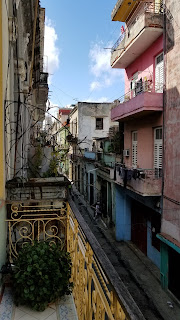
Cuba restricts internet-usage to public Wi-Fi hotspots in parks [all the better to monitor you with!] and limits users by charging for access cards, while cell service is expanding but limited. How many times a day I reached for my cellphone simply amazed me; it was beyond too much! Yes, yes, we rely on our phones for everything nowadays; but do you truly understand what it is like to not use your phone? What is that mountain called over there? Google it. What is that architecture style? Google it. What’s the weather going to be tomorrow? Google it. What’s the latest news out of America? Google it. What is the correct spelling of supercalifragilisticexpialidocious? Google it. What time is it? Look at your phone.

Not having access to Wi-Fi and fully-functional cell service may sound like Heaven to some people; but it was strange to me. It was not as simple as going back in time to pre-cell/pre-internet times; back then you did not know what you were missing since you had never experienced cell and internet service. Now, you know what is missing and slowly see how many times a day you rely on that pocket computer to provide information you never knew you needed before. Is it changing our habits? Certainly! But is that really a bad thing? Do any of us miss going down to the local telegram office to send a message in Morse Code?!
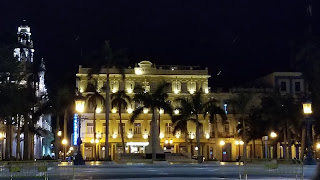
Life changes and evolves; we evolve with it or life passes us by. But what if you can’t evolve with it? What if your government monitors every action you do online? [Well, let’s leave the NSA debate out of this for the moment since they monitor all overseas internet traffic but almost all internet traffic does go overseas now and then back to the USA.] What if you are not free to speak your mind for fear of being overheard by the Secret Police? What if those police follow you simply because you are more successful than your neighbor; or you said the wrong thing at a party? What if government bureaucrats monitor your crop planting, growth, and yield (or widget production) – taking 98% of what you make to distribute ‘equally’ to everyone else? Do you start to understand what Freedom truly means?
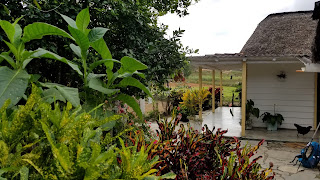

Every country has its problems; every country has its idiosyncrasies. Sometimes we succeed, sometimes we fail; but we Americans do so with the knowledge that we have the ability to raise ourselves up with hard work, sweat, and tears. Our work is our own, not the government’s to take.


Yet every Cuban I saw was working hard and looking for ways to improve their own life and to help their family. The ingenuity displayed to insert boat motors or Toyota motors into 1950’s American cars to keep them running was amazing. Other Cubans would stand in line every morning at the Cuban National Telephone Office to purchase that day’s allotment of Wi-Fi cards so that they could later sell them for double the price to people at the hotspots who ran out of internet time in the middle of a message, project, or call (been there, done that). Some others would take their farm goods or personal art into town and sell them on the street corner, in the market, or simply walking along the sidewalk; though I would not recommend buying cigars this way (as some in our groups discovered while inhaling crap). Some Cubans ran little side businesses at their regular business, like the security guard who sold me Cuban pesos at a rate better than the exchange location he was guarding because that location could not sell to foreigners. All of these are actions I personally observed in Cuba and demonstrate how all people will work hard to make life better; but these people were all looking for ways that kept the government influence in their lives to a minimum. Freedom takes many shapes and forms, not always the same one we may see at home…


Finally, I learned that the American embargo of Cuba is not having the desired effect. One can still get Coke or Diet Coke, American products, and other embargoed items, albeit at a much higher price than home. The Embargo is there to force the Cuban government to change policies and to change its actions, but that assumes the Cuban government actually cares... I do not think they do.


The Cuban government lets its people suffer while reaping profits from their labor. The streets remain full of potholes and destroyed in areas; buildings and infrastructure crumble. Private ownership of boats is strictly controlled and monitored so their own citizens do not run away; piers remain empty. The Cuban government is corrupt with some living the high-life while the majority live in poverty. I understand the desire to force a change, but it is not working because their officials do not hold the same values and ideals that we may.
Things are different in every country, but there is an assumption in International Affairs that governments want to do what is best for their own citizens. Sadly, sometimes the government would rather do what is better for the government at the citizens’ expense; we see this in Cuba, Syria, and Venezuela right now. If current actions are not having the effect you desire, it is time to try a different approach.

I was, and am, impressed with the common people I encountered while visiting Cuba and I respect the hard road that they have traveled and still do!


We are all more similar than we are different across this amazing world…